
Vertical Farming: Growing More With Less
Vertical Farming
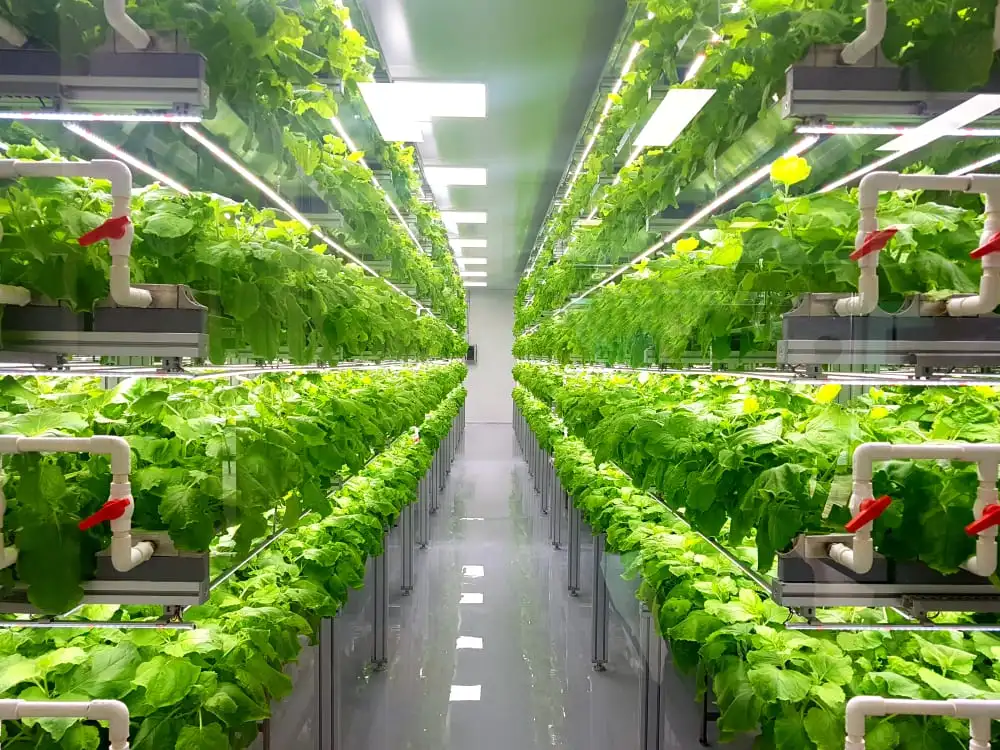
Vertical farming brings agriculture into controlled environments where light, water, nutrients and growing conditions can be monitored throughout the production cycle. By using stacked growing systems and technology-enabled operations, producers can increase output while making better use of limited land and water resources.
Controlled Growing Systems
TECQZA Agro approaches vertical farming as part of a connected agricultural ecosystem, combining controlled production with data, monitoring and resource management.


Intelligent Farm Operations
Lighting, temperature, humidity, irrigation and nutrient delivery are coordinated to maintain consistent conditions for crop development. Sensors and digital monitoring systems help operators understand crop conditions and resource consumption.
Data-Driven Crop Monitoring
Production data can support irrigation planning, environmental control, crop scheduling and operational decisions.
Scaling Controlled Production
Efficient layouts and modular growing infrastructure allow production capacity to expand without requiring a proportional increase in land area.
BLOG & INSIGHTS
Exploring innovations, strategies, and the future.

Vertical Farming: Growing More With Less
Vertical Farming
Vertical farming brings agriculture into controlled environments where light, water, nutrients and growing conditions can be monitored throughout the production cycle. By using stacked growing systems and technology-enabled operations, producers can increase output while making better use of limited land and water resources.
Controlled Growing Systems
TECQZA Agro approaches vertical farming as part of a connected agricultural ecosystem, combining controlled production with data, monitoring and resource management.
Intelligent Farm Operations
Lighting, temperature, humidity, irrigation and nutrient delivery are coordinated to maintain consistent conditions for crop development. Sensors and digital monitoring systems help operators understand crop conditions and resource consumption.
Data-Driven Crop Monitoring
Production data can support irrigation planning, environmental control, crop scheduling and operational decisions.
Scaling Controlled Production
Efficient layouts and modular growing infrastructure allow production capacity to expand without requiring a proportional increase in land area.
BLOG & INSIGHTS